Rxplanet
Showing posts with label Human. Show all posts

Wednesday, December 22, 2010

Science Explains Why Breaking Up Is Hard to Do


Helen Fisher, a biological anthropologist at Rutgers University in New Brunswick, New Jersey, knows all about love. She has observed the brain regions associated with romantic love light up as a man gazes at his inamorata, both in new relationships and in decades-long marriages. Fisher seems to have become a bit jaded by years of Hallmark moments, however. “Who cares about people who are happily in love?” she wants to know. “It’s when you’ve been rejected that you turn into a menace.” So she has started exploring the science of heartbreak instead.

In a study published in May, Fisher and her colleagues asked 15 people who had recently been dumped but were still in love to consider two pictures—one of the former partner and one of a neutral acquaintance—while an MRI scanner measured their brain activity. When looking at their exes, the spurned lovers showed activity in parts of the brain’s reward system, just as happy lovers do. But the neural pathways associated with cravings and addictions were activated too, as was a brain region associated with the distress that accompanies physical pain.

Rejected lovers also showed increased neural response in regions involved in assessing behavior and controlling emotions. “These people were working on the problem, thinking, what did I do, what should I do next, what did I learn from this,” Fisher says. And the longer ago the breakup was, the weaker the activity in the attachment-linked region. In other words: Love hurts, but time heals.

Out-of-place artifact (OOPArt) Part 1

One of the unsolved mysterious that can't be explain by sciences is Out-of-place artifact (OOPArt).
Out-of-place artifact (OOPArt) is a term coined by American naturalist and cryptozoologist Ivan T. Sanderson for an object of historical, archaeological, or paleontological interest found in a very unusual or seemingly impossible context that could challenge conventional historical chronology.

An out-of-place artefact is an object that exists in a place in which it is impossible for it to exist. OOPArts are often of interest to creationists and others who seek evidence that may refute the theory of evolution; they are also used to support religious descriptions of pre-history, ancient astronaut theories, or the notion of vanished civilizations that possessed knowledge or technology more advanced than our own.

Here are few famous OOPArt:
1. Dendera Light
The Dendera light comprises three stone reliefs (one single and a double representation) in the Hathor temple at the Dendera Temple complex located in Egypt. The images are interpreted by traditional Egyptologists to depicting lotus flowers spawning a snake, representing aspects of Egyptian mythology. Controversy arose when the main object in the images was interpreted by some as electric lamps based on comparison to modern devices. These individuals believe the object may be electric lamps. Engineers have constructed a working model based on the reliefs and some authors (such as Peter Krassa and Reinhard Habeck) have produced a basic theory of the device’s operation.
2. Antikythera Mechanism
The Antikythera Mechanism is believed to be an ancient mechanical calculator (also described as a “mechanical computer”) designed to calculate astronomical positions. It was discovered in the Antikythera wreck off the Greek island of Antikythera, between Kythera and Crete, and has been dated to about 150-100 BC. It is especially notable for being a technological artifact with no known predecessor or successor; other machines using technology of such complexity would not appear until the 18th century. While a century of research is finally answering the question of what the mechanism did, we are actually no nearer to answering the question what it was for.

3. Baghdad Battery
The Baghdad Battery was discovered in the village of Khuyut Rabbou’a (near Baghdad, Iraq) in 1936. These artifacts came to wider attention in 1938, when Wilhelm König, the German director of the National Museum of Iraq, found the objects in the museum’s collections, and in 1940 (having returned to Berlin due to illness) published a paper speculating that they may have been galvanic cells, perhaps used for electroplating gold onto silver objects. The artifacts consist of ~130mm (~5 inch) tall terracotta jars (with a one and a half inch mouth) containing a copper cylinder made of a rolled-up copper sheet, which houses a single iron rod. At the top, the iron rod is isolated from the copper by asphalt plugs or stoppers, and both rod and cylinder fit snugly inside the opening of the jar which bulges outward towards the middle (reverse hourglass shape). On MythBusters’ 29th episode (which aired on March 23, 2005), the Baghdad battery myth was put to the test. Ten hand-made terracotta jars were fitted to act as batteries. Lemon juice was chosen as the electrolyte to activate the electrochemical reaction between the copper and iron. (Oddly enough, it was discovered that a single lemon produced more voltage than one of the batteries). When all of the batteries were linked together in series, they produced upwards of 4 volts. Then, the major question was, “What were these ancient batteries used for?”

4. Crystal Skull
 The crystal skulls are a number of human skull hardstone carvings made of clear or milky quartz rock, known in art history as "rock crystal", claimed to be pre-Columbian Mesoamerican artifacts by their alleged finders. However, none of the specimens made available for scientific study have been authenticated as pre-Columbian in origin. The results of these studies demonstrated that those examined were manufactured in the mid-19th century or later, almost certainly in Europe.

5.  Nazca Lines

The Nazca Lines a series of geoglyphs located in the Nazca Desert, a high arid plateau that stretches 53 miles or more than 80 kilometers between the towns of Nazca and Palpa on the Pampas de Jumana in Peru. They were created by the Nazca culture between 200 BC and 700 AD. There are hundreds of individual figures, ranging in complexity from simple lines to stylized hummingbirds, spiders, monkeys, and lizards. The Nazca lines cannot be recognized as coherent figures except from the air. Since it is presumed the Nazca people could never have seen their work from this vantage point, there has been much speculation on the builders' abilities and motivations.

Sunday, December 19, 2010

Chinese Woman Adopts 1,500 Stray Dogs

Ha Wenjin of Tangquan County, Nanjing, China, is a Good Samaritan beyond any definition of the word. She has relinquished her job, her home, her jewelry and her car to adopt more than 1,500 stray dogs.

She used the funds she got from the sale of her worldly goods to establish an unofficial dog rescue center.
“At first I did this in my spare time, but as I gathered more and more abandoned pets, I had to work full time for them,” said Ms. Wenjin.


In her efforts to run the center effectively, she hired 10 people to help her look after the dogs and two others to tend to the needs of some 200 cats at a nearby shelter she also set up with her own funds.


Her efforts were almost all for naught when local government officials who were indifferent to her humanitarian work reclaimed the land for redevelopment.

“I had to find a new place which was deserted and not close to any human habitat, as 1,500 dogs are not quiet. And the place had to be very cheap to rent, as most of our income comes from donations,” Ms. Wenjin told the press.


Ms. Wenjin eventually found a new location for the shelter, in Houyu village, Pukou County, but she is desperate for financial aid in setting up the new rescue center. She partly relies on the many animal loving volunteers who visit during the day and bring hundreds of “pork buns” to feed the dogs.

She moved the dogs to the new place on December 4th.
Kudos to you, Ms. Wenjin, for caring for these unwanted animals and giving them a new chance at what may turn out to be a dog’s life worth living after all.

Houses on the Cliff

It is amazing that human are capable of adapting the environment and survive until today. Not even the cliff could stop human being from building their home up there. Let us see some of these amazing scenery of human architecture. 

1. El Tajo Gorge, Ronda, Spain

Located at Spain. Ronda is a beautiful town build 750km upon the cliff. The El Tajo gorge is bridged in two locations, the new bridge “Puente Nuevo” being the most spectacular and you can look down to see the River Guadalevín below. A truly spectacular view. This leads round the hotel, Parador de Ronda to the Mirador which is a beautiful park which is surrounded by flower beds and scenic views of the surrounding plato.
This place is the origin of Spain bull fight, it has the oldest bullring.


2. Bonifacio Corsica France 

Set on Corsica’s southernmost point, Bonifacio owes its charm to medieval houses built on dazzling limestone cliffs. Built by the Genoese, Bonifacio’s Old Town is a fascinating maze of narrow streets, where you can wander around for hours. More Italian than French, the town has strong Renaissance influences and an old dialect from the times of the Genoese is still spoken to this today. Bonifacio’s natural harbour has been transformed into a chic marina, where tens of yachts from the Mediterranean come to drop anchor. You will find a vibrant display of trendy bars, restaurants and hotels, with a landscape of superb unspoilt beaches and rugged mountains. This all results in high prices and large crowds all through the summer months.

  
3. Castellfollit de la Roca, Spain

This small village in Girona, Catalonia is set on a steep cliff overlooking the Fluvià river. The basalt cliff the village is on is a result of two lava flows that took place thousands of years ago. Due to its unique location, Castellfollit de la Roca is illuminated after nightfall until midnight for 6 months throughout the year. The village was built during medieval times with dark, narrow streets and houses made from volcanic rock. Apart from its spectacular location, Castellfollit is a gateway to the Natural Park of the Volcanic Area of the Garrotxa, where you can admire beautiful volcanic scenery.


4. Santorini, Greece


The Aegean Sea gem of Santorini is part of the Cyclades volcanic archipelago. A good deal of the the island’s architecture, from Santorini hotels to private villas, is built on high cliffs. As a result this island of natural white, black and red beaches offers remarkable views.


5. Cinque Terre, Italy

Cinque Terre is composed of Monterosso, Vernazza, Corniglia, Manarola and Riomaggiore, five small villages built on a precarious stretch of rocky Liguria coast. A UNESCO World Heritage Site since 1997, the car-free area is accessible by train, eco-friendly electrical bus, ferry, bike and of course, on foot. Each town has its own quaint charm: Riomaggiore is home to many artists and great beaches; Vernazza is a natural harbour overlooked by a ruined castle; Monterosso has gorgeous sandy beaches and excellent seafood; Corniglia sits on a hilltop, attracting many hikers and Manarola offers remote rocks for private sunbathing. Visitors will have to pay a small entrance fee to help preserve Cinque Terre’s beauty, but it is definitely worth it. 


They are all so beautiful, which one do you like the most?

Friday, December 17, 2010

Nertherlands Orange Festival

The Queen's official birthday (Queen's Day, koninginnedag) in the Netherlands is celebrated each year with parties, street markets, concerts and special events for the royal family on April 30 or on April 29 if the 30th is a Sunday.

This is not really a Netherlands festival. It is, in fact, from the south of France where they actually grow citrus. These pictures are from the French Festival Citrusov.

Oranges, anyone?

Top Ten Weirdest Phobia Ever

10. Kathisophobia
The Fear of Sitting Down


It is an intense fear of the meeting or any activity that is related to pain while sitting. Also known as cathisophobia, thaasophobia, people who have been kidnapped or have been tortured as they sit on nails, pointed objects, amber burning, etc. usually suffer from this phobia.


9. Phobophobia
Fear of Fear, Fear of phobia


Phobophobia can also be defined as the fear of phobias or fear of developing a phobia. Phobophobia is related to anxiety disorders and panic attacks that are directly linked to other types of phobias, such as agoraphobia. Phobophobia might develop from other phobias, in which the intense anxiety and panic caused by the phobia might lead to fearing the phobia itself, which triggers phobophobia before actually experiencing the other phobia.


8. Telephonophobia
Fear of Telephone

Telephonophobia can be define as fear of generating or taking phone calls. Victims typically report fear that they would fail to respond appropriately in a telephone conversation, and fear finding absolutely nothing to say, which would finish in embarrassing silence, stammering, or stuttering. The associated avoidance behavior consists of asking others (e.g., relatives at home) to take their phone calls and exclusive use of answering machines. As being a outcome, the sufferers steer clear of several actions, for example scheduling events or clarifying info.


7. Ablutophobia
Fear of Bath


Ablutophobia will be the persistent, abnormal and unwarranted fear of bathing, washing, or cleansing. This phobia is a situational particular phobia. Ablutophobia tends to be more typical in children and ladies than in males and particularly with those those who are very emotional. Such a phobia makes you feel dejected and lonelier. It may be an influence of an event from the past linking bathing, washing or cleansing to emotional trauma. The original catalyst would be a real-life scare of some kind, the condition may also be triggered by any event observed on Tv, films or even witnessing someone else expertise trauma.

It is different from fear of water or hydrophobia as the person is not afraid of the water, but the cleansing. He might not care about the water if it is not being utilized to clean him/her. Those suffering form Ablutophobia expertise – dizziness, breathlessness, excessive sweating, heart palpitations, nausea, dry mouth, feeling sick, shaking, becoming mad or losing control.


6. Anthophobia
Fear of Flowers

Anthophobia is a persistent fear of flowers. Although victims usually understand that they face no threat from flowers, they invariably experience anxiety at the sight or thought. Any genus or species of flowers can instill fear, as can any flower component, for example a petal or stem. Anthophobia is also referred to as the fear of little harmless issues, such as a little torn piece of paper.


5. Chrometophobia
Fear of Money


Fear of money: An abnormal and persistent fear of money. Sufferers experience undue anxiety even though they realize their fear is irrational. They worry that they might mismanage money or that money might live up to its reputation as "the root of all evil." Perhaps they remember well the ill fortune that befell the mythical King Midas. His wish that everything he touched be turned to gold was fulfilled, and even his food was transformed into gold.


4. Nephophobia
Fear of Clouds


Nephophobia is the fear of clouds. The prefix nepho- is derived from the Greek word nephos meaning 'cloud'. Clouds in the sky and even cloud photos can cause extreme anxiety.


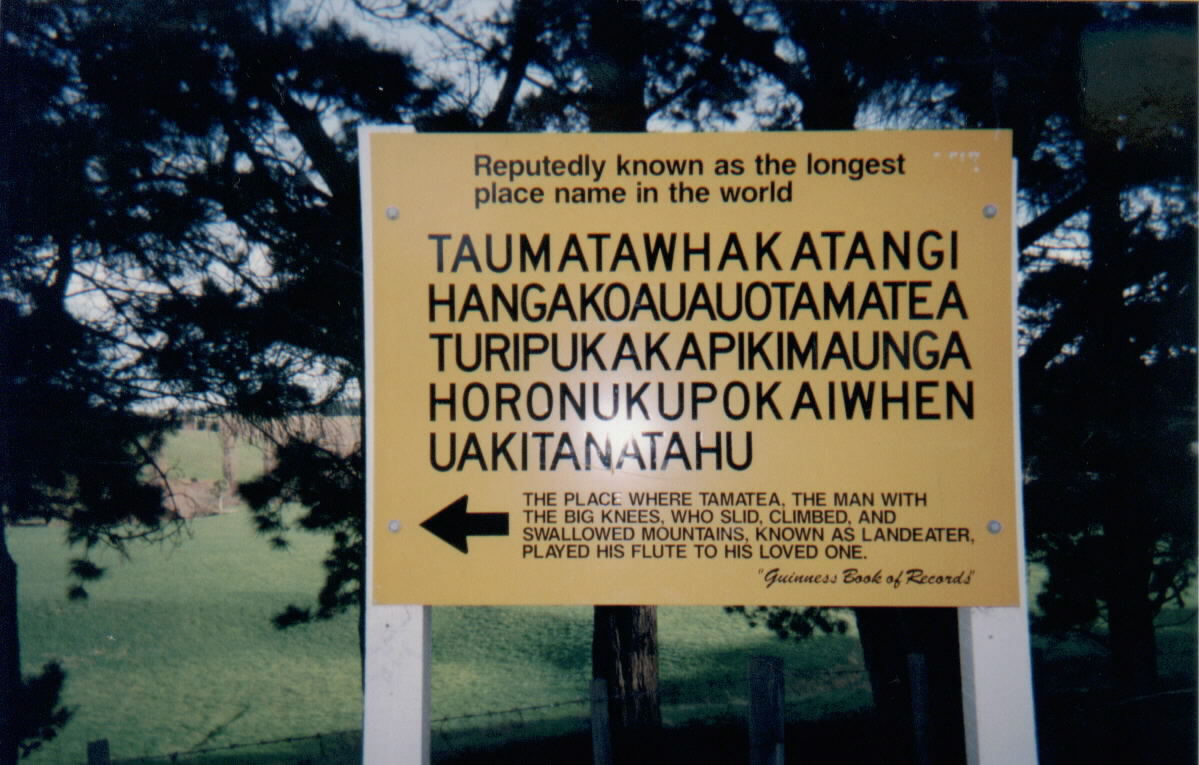
3. Hippopotomonstrosesquippedaliophobia
Fear of long words


Believe it or not, this is the fear of long words. If you suffer experience of anxiety looking at the word "Hippopotomonstrosesquippedaliophobia". You might be a victom of "Hippopotomonstrosesquippedaliophobia"....lol


2. Nomatophobia
Fear of Names

This normally cause by parents who give their child some abnormal, weird and funny name like "pizza", "road", "butt". Which later cause their child felt embarrass to their name thus afraid of the name.


1. Panophobia
Fear of Anything!

From the Greek 'pan' and 'phobos,' also called Omniphobia, Pantophobia, or Panophobia, is a medical condition known as a "non-specific fear" or "the fear of everything" and is described as "a vague and persistent dread of some unknown evil", or only seeing the extremes to everything.

Germain researchers declaire cure in HIV patient

(Reuters) - German researchers who used a bone marrow transplant to treat a cancer patient with the AIDS virus, have declared him cured of the virus -- a stunning claim in a field where the word "cure" is barely whispered.

The patient, who had both HIV infection and leukemia, received the bone marrow transplant in 2007 from a donor who had a genetic mutation known to give patients a natural immunity to the virus.

Nearly four years after the transplant, the patient is free of the virus and it does not appear to be hiding anywhere in his body, Thomas Schneider of Berlin Charite hospital and colleagues said.

"Our results strongly suggest that cure of HIV has been achieved in this patient," they wrote in the journal Blood.

AIDS researchers have rejected the approach on any kind of scale for patients with HIV. A bone marrow transplant is a last-ditch treatment for cancers such as leukemia.

It requires destruction of a patient's own bone marrow -- itself a harrowing process -- and then a transplant from a donor who has a near-exact blood and immune system type. Months of recovery are needed while the transplant grows and reconstitutes the patient's immune system.

"It's not practical and it can kill people," said Dr. Robert Gallo of the Institute of Human Virology at the University of Maryland, who helped discover the human immunodeficiency virus that causes AIDS.

"It is possibly a cure, that's for sure, you won't know for absolute sure until the person dies and undergoes extreme PCR (genetic) analysis of post-mortem tissue."

The mutation affects a receptor, a cellular doorway, called CCR5, that the AIDS virus uses to get into the cells it infects.

Since the 1990s scientists have known that some people, mostly of Northern European descent, have the mutation and are rarely infected with HIV.

"They are uninfectable, virtually," Gallo said.

Some researchers are working on the idea of gene therapy to treat or try to cure HIV, but the technology is still in experimental stages.

"I don't want to throw cold water on an interesting thing, but that's what it is -- an interesting thing," Gallo said.
Schneider's team has been following the patient, taking samples from his colon, liver, spinal fluid and brain as he developed various conditions that justified the tests. They tested all these samples for evidence of the virus, which can be difficult to detect unless it is actively infecting cells.

All these places are suspected "reservoirs" where HIV can hide out for years, to rebound in patients who stop taking drugs that suppress the infection.

This patient appears to have a fully functioning immune system, they found, which appears genetically identical to cells from the donor -- not the patient's own immune cells.

Schneider's team found no evidence of HIV anywhere.
"From these results, it is reasonable to conclude that cure of HIV infection has been achieved in this patient," they wrote.

The AIDS virus infects 33 million people globally and has killed more than 25 million since the pandemic began in the 1980s. Cocktails of strong drugs can suppress the virus, keeping patients healthy and reducing the chance they will infect others, but there is no vaccine.

Wednesday, December 15, 2010

Werewolf boy from india

An 11-year-old "werewolf" boy - Pruthviraj Patil is one of 50 in the world who suffers from hypertrichosis, a rare genetic condition known as Werewolf Syndrome. As a result his face and body is covered in thick, matted hair. Born in the Indian district of Sangli, near Bombey, he hardly ever leaves his village because of his fear of being traunted by strangers.


The only parts of his body that are not covered with hair are the palms of his hands and soles of his feet. It is believe his genetic condition was caused by a flaw during pregnancy.Pruthviraj says he is anxious to get the hair removed but even after laser treatment it simply grows back. The doctors don't have any answers to his predicament.

Let us prey together for god to recover his poor child....God Bless You

Related Posts Plugin for WordPress, Blogger...

 
Photography Templates | Slideshow Software